This page isn't public yet. Drop in the access code to take a look.
That code didn’t work. Try again.
Ask Vivek for the code.
Vol II · Peanut Mylk
Vegan, but make it Greek.
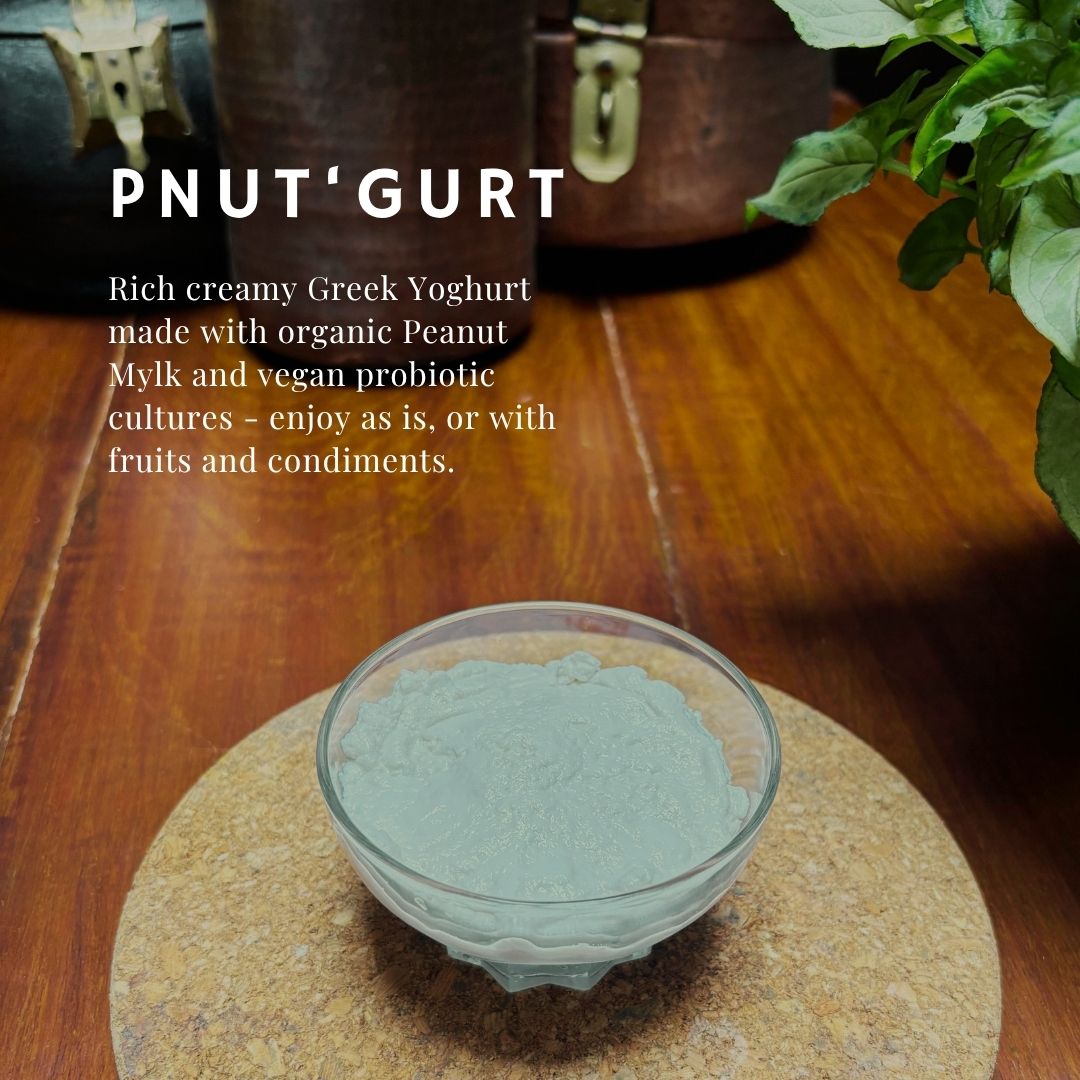
Stone-ground organic peanut mylk, set with a vegan culture and strained Greek-style. Surprisingly creamy, no thickeners, no fillers, no compromises.
Stone-ground organic peanut mylk, set with a vegan culture (acidophilus + bifidum), then strained Greek-style to thicken. No starch fillers, no thickeners, no added sugar.
Approximate values per 100g. Boilerplate - to be replaced with lab figures once finalised.
Sourcing
Peanuts from a single Andhra Pradesh farm practising rain-fed rotational farming - no pesticides, no monocropping, no irrigation pumps. Stone-ground in small batches the day before culturing.
Packaging
Glass jars only - re-usable, returnable, and absurdly satisfying to hand-wash. Every batch ships with a paper-and-twine seal and a return label for sending the empties back. Plastic-free, except for the lid liner (we’re working on it).
Sustainable agriculture
Peanut, grown without pesticides or monocropping, is a soil-restoring crop - it fixes nitrogen back into the earth. Our partner farm rotates peanut with millet to give the soil rest. Plant-based is only sustainable when the plants themselves are grown well.
The 18-hour way (rooted in Ayurveda)
Peanuts are technically kshudradhanya in Ayurvedic taxonomy - heavy, grounding, energising when properly soaked or ground. Fermenting them through a yoghurt culture is a new-meets-old idea that makes them dramatically easier to digest. Same 18-hour patience, just on a different mylk.
Cleaner than anything in the supermarket aisle. The texture is unreal - dense and creamy in the best way.
Finally a yoghurt that doesn’t taste like a science experiment. Worth every paisa.
Glass jars are a chef’s kiss. The yoghurt is even better than the packaging suggests.
Showed up cold, sealed, and on time. Has become a weekly habit in our home.